

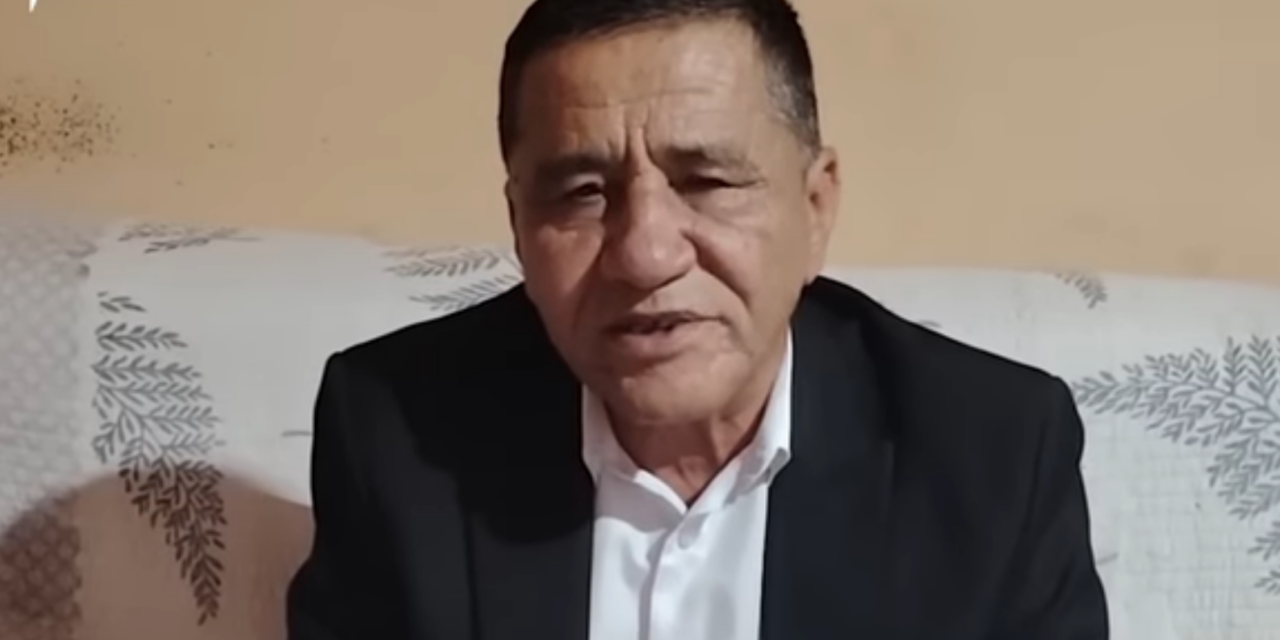
Land disputes linked to the transfer of farmland to Chinese investors have resurfaced in Uzbekistan’s Andijan region, reviving concerns that have appeared repeatedly over the past several years. Starting in late 2024, farmers across multiple districts report that their legally leased agricultural land has been taken without court decisions and under direct pressure from local authorities, police, and prosecutors.
According to investigations published by RFE/RL’s Uzbek Service (Radio Ozodlik), farmers report being forced to surrender agricultural land without court decisions, raising concerns about coercion, property rights, and due process. Farmers say they were compelled to sign written statements declaring that they were “voluntarily” surrendering land to the state reserve, after being told that the land would ultimately be allocated to Chinese investors.
One of the most detailed accounts comes from Zoirjon Gapparov, head of the “Savay Ariq Suvlari” farming enterprise in Qo‘rg‘ontepa district of Andijan. Gapparov says pressure on him began in December 2024, when officials came to his home and forcibly took him and his wife to the district hokimiyat. “They first took me to the deputy hokim for agriculture, Shukhrat Kamchiyev. Then they took me to the district hokim. That’s where the pressure started,” Gapparov said.
“This Is a Presidential Order”
According to Gapparov, the district hokim presented the seizure of his land as a decision imposed from above. “They told me it was a presidential order. ‘We must give land to the Chinese. We will take your land. Write a statement (a written statement declaring the land was being surrendered “voluntarily”- Ed.),’ they said.”
Gapparov said he was not shown any document confirming such an order and was not informed of any legal procedure for terminating his land lease. When he refused to sign the statement, police officers were summoned. “They called the police. I refused to write the statement. Then they tried to scare me. But I did not agree to write it.”
After his refusal, pressure intensified. Gapparov reported repeated inspections by police and prosecutors. “The police came and checked my fields. The prosecutor’s office came and inspected my fields,” he said. He also stated that several young men working in agriculture were taken to the police and forced to write false statements claiming they had illegally purchased land from him. According to Gapparov, these attempts failed, but the pressure continued.
He said he filed formal complaints with the prosecutor’s office. “I wrote to the prosecutor, but no measures were taken. There was not even an answer,” he said. Gapparov also said that he was later summoned to the hokimiyat and told directly, “You will no longer farm. Your land will be given to the Chinese.” Officials reportedly claimed that he lacked valid land documents, a claim Gapparov rejects, saying he holds all required legal paperwork.
A Pattern Repeated Across Districts
Radio Ozodlik’s reporting shows that Gapparov’s case is not an exception. Farmers from several districts describe similar experiences: being taken from their homes by mahalla officials, taken to the hokimiyat, and threatened with imprisonment if they refused to sign statements surrendering their land.
One anonymous farmer from Ulug‘nor district said: “The police came to my home and forcibly took me to the hokim. He said, ‘You will surrender your land, write a statement.’ When I refused, he shouted, ‘This is a presidential order. You are opposing the president. If you don’t write it, I will imprison you.’ Under pressure from several police officers, they forced me to write it.”
In Jalaquduq district alone, Radio Ozodlik reported that land was taken from about 46 farmers and later transferred for use by Chinese-linked investors. In other cases, farmers said they were forced to surrender 20–25 hectares, 30 hectares, or even 40–50 hectares. Video footage published by Radio Ozodlik shows farmers inside hokimiyat buildings, surrounded by police and prosecutors, writing statements declaring that they were handing over their land “voluntarily.”
The head of the Qo‘rg‘ontepa District Farmers’ Council, Orifjon Qayimov, acknowledged that land was being taken from farmers and transferred to a special directorate, describing the process as voluntary. Farmers strongly dispute this characterization, saying none of those affected were summoned to court, despite legal requirements that land leases may be terminated only through judicial decisions or genuine voluntary consent.
Farmers also reject official claims that land is being taken because of unpaid debts or failure to meet production targets. They say local authorities created these debts by imposing unrealistic cotton quotas of 40 centners per hectare, regardless of soil quality or water availability, and by promoting drip-irrigation systems installed by private firms that took payment but failed to deliver working systems.
Gapparov said he was left with 425 million UZS (approximately $35,400) in debt for a drip-irrigation system that never worked. Water tanks were built with poor-quality concrete, walls cracked, and water leaked, but payment was still demanded. Farmers say these debts are then used as justification to seize land and reallocate it to other investors.
A similar situation was described by Azizakhon Ergasheva, head of the “Azizabonu Durdonasi” farming enterprise. She said that she was taken to the hokimiyat late at night and forced to write a statement surrendering her land. Ergasheva said her farm was also labeled “indebted,” despite the fact that the debt resulted from mandatory production targets and failed irrigation projects promoted by local authorities. Like other farmers, she said she was never summoned to court and had no legal avenue to challenge the loss of her land.
Law, Policy, and the Expanding Role of China
These events are unfolding in the context of a Cabinet of Ministers Resolution No. 332 of 27 May 2025, on introducing a new system for leasing agricultural land, which created Agricultural Land Service Directorates in Andijan, Jizzakh, Namangan, Tashkent, Fergana, Syrdarya, and Kashkadarya regions. Each directorate operates with a staff of just five people and is empowered to manage leased agricultural land and to sublease it to domestic and foreign investors, including foreign companies and individuals.
The resolution explicitly allows land transferred to these directorates to be sub-leased, while prohibiting any further subleasing. District hokimiyats were tasked with transferring land to the directorates, even in cases where farmers held valid lease agreements.
Although official documents refer broadly to “local and foreign investors,” farmers and analysts say that Chinese companies are the primary beneficiaries in practice. Official reports confirm that Chinese business delegations visited at least three districts in Andijan over the past year to inspect agricultural land.
According to the National Statistics Committee, as of 1 December 2024, Uzbekistan had 17,900 enterprises with foreign capital, 4,873 of them involving Chinese investment. In the past year alone, more than 1,500 new Chinese companies were registered, making China the country’s largest foreign investor.
Analysts note that China views Uzbekistan as a strategic partner, with interests spanning energy, natural resources, logistics, markets, and regional influence. At the same time, the transfer of agricultural land to foreign companies, especially under pressure, has raised environmental, social, and legal concerns. Farmers warn that long-term leases, heavy use of chemicals, and limited oversight risk degrading farmland and weakening local agricultural livelihoods.
The events in Andijan show how land reform and investment policy can undermine legal protections when carried out without transparency or judicial oversight. Farmers’ testimonies, backed by Radio Ozodlik’s video investigations, point to a system in which coercion replaces due process and “voluntary” consent is obtained under pressure. As foreign investment, particularly from China, continues to grow, these cases raise serious questions about the protection of land rights and the long-term stability of rural communities in Uzbekistan.
Uzbek Forum has also documented cases of illegal land confiscation affecting farmers in other regions, pointing to a broader and ongoing problem rather than isolated incidents.
This article is based on reporting by Ozodlik (Radio Free Europe/Radio Liberty).