

Berlin, November 19, 2026
New Report from Uzbek Forum for Human Rights
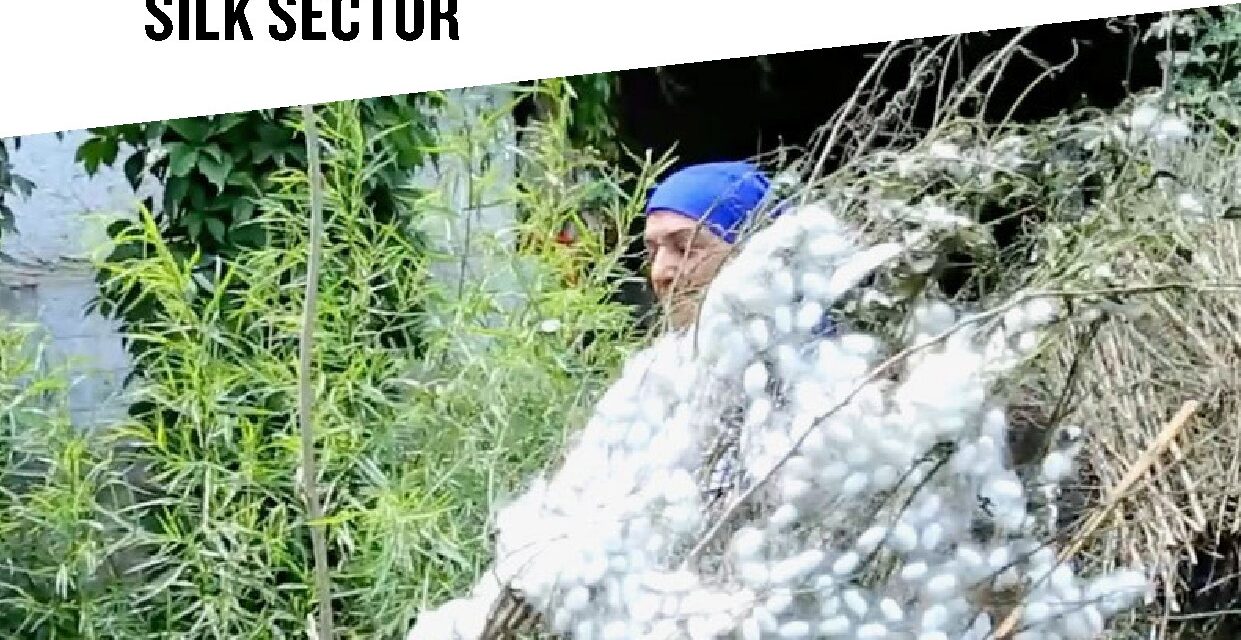
A new report by Uzbek Forum for Human Rights “It is Impossible to Refuse.” – State-Imposed Forced Labor and Exploitation in Uzbekistan’s Silk Sector details how farmers in Uzbekistan are being forced by government officials to produce silkworm cocoons under threat of penalty. The report is the culmination of three years of monitoring the silk sector carried out in 21 districts of five regions of Uzbekistan and the Republic of Karakalpakstan. Uzbek Forum conducted 85 interviews with farmers, home-based producers, and representatives of silk producing companies and reviewed official documents governing the sector along with hundreds of social media posts from silkworm producers.
Cotton and grain farmers described being forced to sign contracts by local officials with silk processing enterprises (known as clusters) and pressure including harassment, threats to terminate their land leases and even incidences of violence if they refused or failed to deliver a state-set amount of cocoons. Farmers who fulfilled their quotas for cocoons told Uzbek Forum that they were either not paid at all for their work or paid so little that it was not profitable for them.
Home-based producers of silkworm cocoons were found to be at risk of exploitation as they depend on silk companies for access to land they can use for cultivation of crops or livestock grazing on condition that they maintain mulberry trees and produce a set amount of cocoons. Failure to comply with these conditions can result in the termination of their land lease. According to most producers of silkworm cocoons, the associated costs and intensive labor involved in producing them makes it an unprofitable business they would prefer not to do if they had the choice.
Both farmers and home-based producers described contracts that were often blank and contained no information about prices but which they nonetheless had to sign. Copies of contracts were usually retained by officials for “registration” with the Ministry of Agriculture.
Despite privatization of the sector in 2017, the government still plays a central role in the silk sector by setting state wide production targets to supply silk clusters with silkworm cocoons and approving the purchase prices determined by Uzbekipaksanoat, the Uzbek Silk Association. The obligation of local officials to fulfill centrally imposed quotas creates incentives to use forced labor to ensure that quotas are met.
Uzbekistan is the world’s third largest producer of silkworm cocoons after China and India with exports in 2025 amounting to $87 million US, mainly to Vietnam, South Korea, China, Türkiye, and India. The Uzbek government has identified silk production as a key strategic sector which it intends to substantially expand. However, as an increasing number of countries, including the US and the EU, are introducing legislation to ban imports of goods made with forced labor, Uzbekistan is undermining its export potential significantly.
According to Umida Niyazova, director and founder of Uzbek Forum, “The Uzbek government has demonstrated that it successfully followed through on its commitment to abolish state-imposed forced labor of cotton pickers in 2021. They should now extend these reforms to abolish mandatory quotas and administrative control that facilitate a system of coercion and guarantees private silk companies a steady supply of cheap silk cocoons.”
Uzbek Forum urges the government of Uzbekistan to:
- Desist from the use of forced labor and abolish the imposition of cocoon quotas on farmers.
- Establish land tenure security for farmers and home-based cocoon producers.
- Require silk enterprises to create the conditions for cocoon producers that ensure decent work and pay.