

Uzbekistan has a favorable climate for silk production, a long tradition of silk making, and rural communities where jobs are scarce. The government sees the industry as a way to create jobs, reduce poverty, and increase export earnings.
What do those ambitions mean for the farmers and rural families who produce silkworm cocoons? A new report by Uzbek Forum for Human Rights documents how farmers are forced to produce cocoons and how rural families who raise silkworms at home face exploitative conditions and struggle to get paid.
A cotton and grain farmer in the arid Kamashi district of Kashkadarya had no mulberry trees with leaves suitable for feeding silkworms. Yet when an Uzbek Forum monitor interviewed him in April 2026, he had already been told to deliver 80 kilograms of cocoons to the district silk processing enterprise.
His land lease required him to grow cotton and grain, there was no obligation to cultivate cocoons.
At the start of the year, the farmer said he signed a blank contract which contained only the stipulated amount of cocoons he was expected to deliver. It was the same procedure as in previous years. He received no copy of the contract and did not know what price he would be paid.
“Maybe they won’t pay me at all,” he said.
The previous year he received no payment because he had fallen short of the quota set by local officials. What he earned from the cocoons he delivered was less than what it cost to produce them because he had to cover the cost of the silkworm eggs and other resources.
All farmers interviewed for the report said they saw little point in producing cocoons but were afraid to refuse.
“It’s easier to agree and buy the cocoons when it’s time to deliver them than to get into a dispute with the district authorities,” was a common explanation.
Uzbekistan has produced silk for centuries and is the world’s third-largest producer of silkworm cocoons, after China and India. The government sees silk products as a strategic export and a source of foreign currency. It also expects the industry to create jobs and reduce poverty in rural areas, where steady work is often hard to find.
The report examines what those ambitions mean for the people who produce the cocoons. Between 2024 and 2026, independent rights monitors conducted 85 interviews with farmers and home-based cocoon producers in 21 districts across five regions of Uzbekistan and Karakalpakstan, reviewed legislation, contracts, media and social media, as well as official documents governing the sector.
The report’s main finding is that the current cocoon production system relies on the state-imposed forced labor of farmers and exploitation of low-income rural families. As a result, there is a substantial gap between the goals of developing the sector and improving rural livelihoods, and the actual conditions faced by cocoon producers.
The Uzbek government retains control over much of the silk industry. It allocates land for mulberry trees (the food base for silkworms), sets production targets, and approves the prices silk enterprises pay for cocoons. As of October 2026, Uzbekistan had 62 silk-processing enterprises, also known as clusters. These are privately owned but operate within government programs to develop the industry.
Each year, the government sets a national cocoon production target. Official decisions describe these figures as “prognoses.” In practice, they are divided among regions and districts and then assigned to individual producers as quotas. Official documents show that cocoons are produced in 150 of the country’s 162 districts and that farmers are assigned about 65 percent of the annual national target.
District governors, known as “hokims,” are assessed on whether their districts meet their targets. This creates an incentive to force cotton and grain farmers to deliver cocoons, even though their land leases do not require it. This use of production targets has deep roots in Uzbek agriculture, particularly in cotton and wheat. In silk cocoon production, it places a separate obligation on farmers who already have crops to tend.
Farmers in Uzbekistan lease their land from the state and depend heavily on local officials for access to land, irrigation water, credit, and machinery. This makes farmers vulnerable to coercion, as challenging the authorities can have serious consequences. Most said they did not even try to object for fear of reprisals.
“They say it’s voluntary, but when the time comes, the prosecutor calls us, the police come to our homes, and the hokim shouts at us and insults us in closed meetings, demanding that we deliver those damned cocoons,” a farmer in the Fergana region said. The arbitrary abuse of power by local officials has also resulted in the use of violence.
In one case in 2025 when a farmer in Kamashi district in Kashkadarya region refused to fulfill his quota, he was handcuffed and beaten by police officers.
The quota is based on how much land a farmer leases and in some cases the quota can be negotiated down with officials. For most, however, cocoon production still means more work and more expense, with little to show for either.
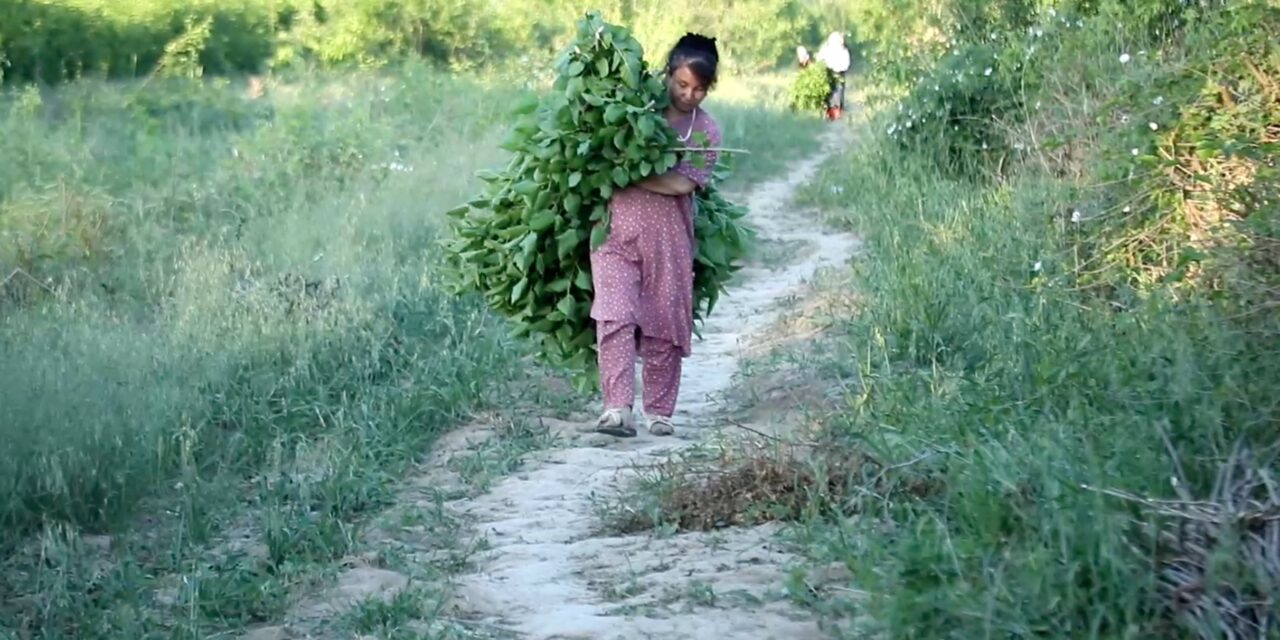
Raising silkworms takes about four weeks and begins in the spring, when cotton and grain farmers are already at their busiest in the fields. Silkworms eat only mulberry leaves, which have to be cut and carried by hand. The larvae need feeding five or six times a day and night. Just a single box of eggs, which yields about 60 kilograms of cocoons, can keep an entire family busy.
Farmers who cannot raise silkworms themselves have to find someone willing to do the work for additional payment or buy cocoons to make up any shortfall in their quotas. They then deliver the cocoons to the district’s silk cluster. The quota system effectively gives private silk enterprises a steady supply of cheap silk cocoons while farmers bear the cost of growing them.
About 35 percent of the annual cocoon harvest comes from rural families who raise silkworms at home and run small household farms. For many of these families, the main motivation to produce cocoons is the opportunity gain access to land. Silk clusters offer five-year leases on plots planted with mulberry trees, averaging about one hectare. In return, families agree to tend the trees and deliver a set quantity of cocoons each year.
Families can grow other crops on the same plots to eat or sell. Where steady jobs are scarce, losing a plot can mean losing an important source of food or income. That makes it hard to challenge the terms of the lease or ask the cluster for a higher price. Promised government subsidies often arrive late or never come at all.
Like farmers, home-based producers told monitors they signed blank contracts that were taken away “for registration with the agriculture department” and never returned. The contracts reviewed by Uzbek Forum specified how many cocoons households had to deliver but left out the purchase price and the costs that would be deducted from the final payment. If a household fails to deliver the agreed quantity, the contract provides for the termination of its lease.
For years, forced labor in silk production was overshadowed by the much larger issue of mass mobilization of people forced to pick cotton. Uzbekistan ended that practice only a few years ago and the reforms implemented by the government have demonstrated its ability to end state-organized forced labor in a major export industry. In the silk sector, the reform process should start with abolishing compulsory “production targets” which are de facto quotas, and protecting farmers’ land lease rights.
The silk sector has the potential to create quality jobs with decent pay and become a prestige export associated with Uzbekistan’s historical traditions and the Silk Road. But coercion will never produce anything of lasting quality or value. The Uzbek government needs to decide whether silk made in Uzbekistan will be associated with forced labor and exploitation or recognized as a high-value product which creates commensurate wages and working conditions.