
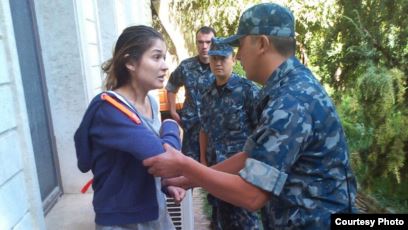
On February 5, 2025, Switzerland and Uzbekistan signed the “Agreement regarding the sharing of forfeited assets”, under which $182 million will be returned to Uzbekistan.1 These funds stem from assets illicitly obtained through corruption by Gulnara Karimova, the daughter of former President Islam Karimov, and were confiscated by Swiss authorities in a money laundering case.
This marks the second tranche of funds returned to Uzbekistan under this asset recovery process. The first tranche, amounting to $131 million, was repatriated in 2022 under a prior agreement between the two countries and placed under the management of the UN Trust Fund for the implementation of “sustainable development” programs in Uzbekistan.2
In total, 800 million Swiss francs ($910 million according to the current exchange rate) was frozen in Switzerland in connection with this case, of which about $340 million has been confiscated so far. But that $800 million is far from the full extent of Karimova’s illicit assets frozen to date. In addition, at least $300 million remains frozen in Ireland, Belgium, and Luxembourg under a lawsuit filed by the U.S. Department of Justice in 2015.3 Her illicit assets are also reported to have been funneled into bank accounts in other countries, including at least $100 million in Latvia, $275 million in Hong Kong, and $97 million in U.K. banks.4 These funds have not yet been confiscated, as the legal proceedings are still ongoing.
This article aims to analyse the process of asset restitution from Switzerland to Uzbekistan, with a particular focus on how the first tranche of $131 million has been allocated and managed. Based on these findings, the article seeks to provide recommendations for the distribution and administration of the following tranches.
At this stage, the publication presents only preliminary findings, focusing on how the ongoing process meets Switzerland’s commitments to ensuring fair and accountable asset restitution. A more comprehensive analysis, along with well-founded recommendations, will only be possible once the entire $131 million has been fully utilized.
Download the full article in English
Download the full article in Russian
Download the full article in Uzbek