

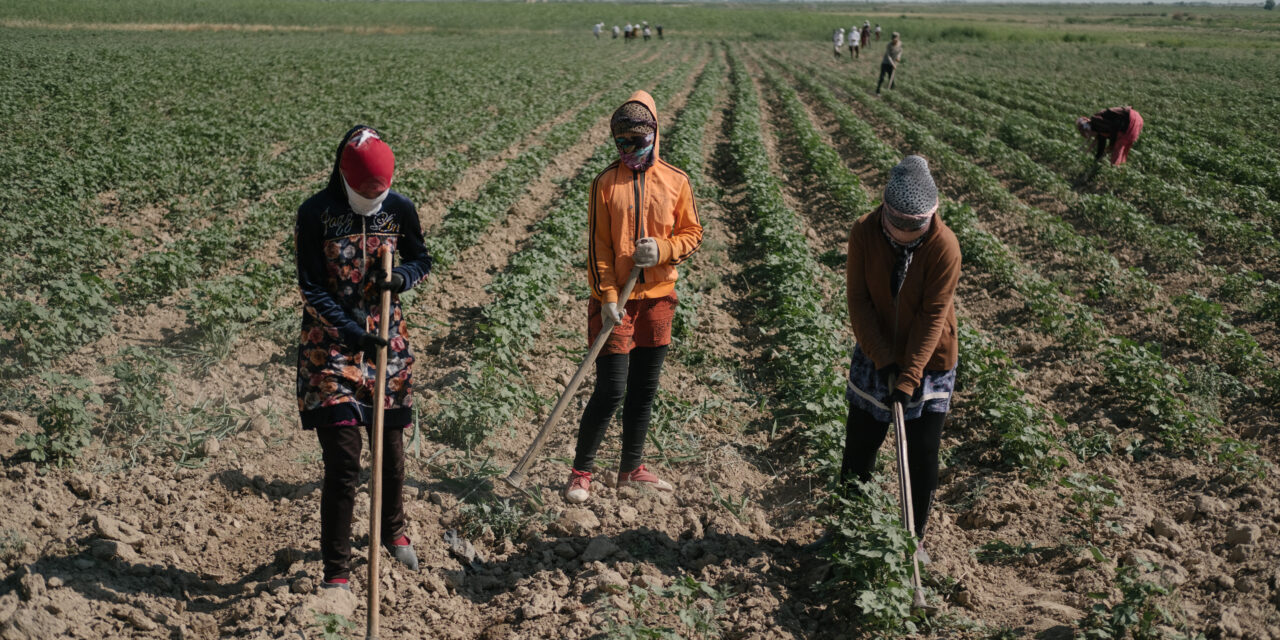
Uzbek media have published yet another audio recording of the hokim of Piskent district in Tashkent region threatening to seize farmers’ land for failing to follow his instructions.
On October 9, 2026, Uzbek media outlet Kun.uz reported that it had obtained an audio recording of a meeting between Piskent district hokim Muzaffar Aripov and local farmers. The district prosecutor and the head of the district police department were reportedly also present.
Before entering the meeting concerning potato cultivation, the farmers’ cell phones were confiscated, but someone nonetheless managed to make a recording. According to Kun.uz, the recording contains threats by the hokim to seize land and obscene insults directed at several farmers whom the hokim called upon from a list, ordering them to stand up and account for their actions.
“If I take your land away tomorrow, you’ll see what happens. I don’t understand these farmers, just do what I tell you. In the end, they’ll force me to take their land away. Then they’ll lie at my door like dogs, begging,” the district hokim said. He also warned farmers “not to joke or play games with him”, threatening to take “not only their land but their lives”.
According to the Kun.uz source, the meeting took place on July 18, 2026, and concerned planting a second crop on fields following the wheat harvest. The hokim reportedly demanded that farmers purchase seed potatoes from a particular company.
“Now he is trying to take land away from those who did not buy potatoes from that company, threatening them with the prosecutor’s office. It has become impossible to work. We need to sow wheat now, but he is obstructing that too,” one farmer recently told the outlet.
Coercive State Control Over Agriculture Continues
In July 2026, Uzbek Forum reported similar pressure on farmers during the wheat harvest. Farmers said they were being forced to sign revised contracts with increased production quotas and deliver grain beyond their existing contractual obligations.
In a video appeal, farmer Komiljon Ergashev from Olot district in Bukhara region said that district hokim Nargiza Nematova demanded an additional 20 tonnes of wheat after he had already fulfilled his quota. When he refused, she reportedly prevented combine harvesters from entering his fields.
In June, Uzbek media published audio recordings of hokims in Kuva and Muzrabat districts threatening and insulting farmers. In one recording, Kuva district hokim in the Fergana region, Khalimjon Umarov, is heard using abusive and obscene language while demanding that a farmer surrender his land after failing to attend a meeting with him.
“Hey you, you b*** don’t you want to talk to me? What the f*** are you playing at? I’ve been looking for you for three days and can’t find you. … Shall I have you locked up right now?! Do you want to be locked up?” Umarov said.
There was similar behavior from the hokim of Muzrabat district in Surkhandarya region at a meeting concerning wheat production on June 15. In a recording, hokim Mamatkulov can be heard using humiliating language while demanding that farmers meet their production quotas and deliver wheat within a few hours.
“Why haven’t you met your quota? If you don’t meet it by 11, I’ll lock you up,” he said. Later, he called one farmer an “a**hole,” gave him one hour to meet the quota, and threatened to contact the deputy regional prosecutor to have a deadline imposed on him.
These incidents illustrate the impunity of abusive officials and persistence of coercive state control over agriculture in Uzbekistan, despite official commitments to reform the sector and provide greater autonomy for farmers. Local officials continue to treat farmers as subordinates obliged to carry out administrative instructions, while farmers bear the costs and risks of production.
Threats of imprisonment, prosecutorial intervention, and loss of land undermine farmers’ ability to make independent decisions about what to grow and whom to buy supplies from. The repeated use of such methods across different districts points to a systemic problem in which farmers’ livelihoods remain dependent on compliance with officials’ demands.