
Uzbekistan, which once sought to salvage its international reputation by liberalizing freedom of expression, has increasingly shifted toward tightening control over public discourse, monitoring and punishing citizen journalists deemed critical of the government. President Mirziyoyev’s early promises of openness now ring hollow, as ongoing arrests underscore the risks faced by those exercising their right to freedom of expression.
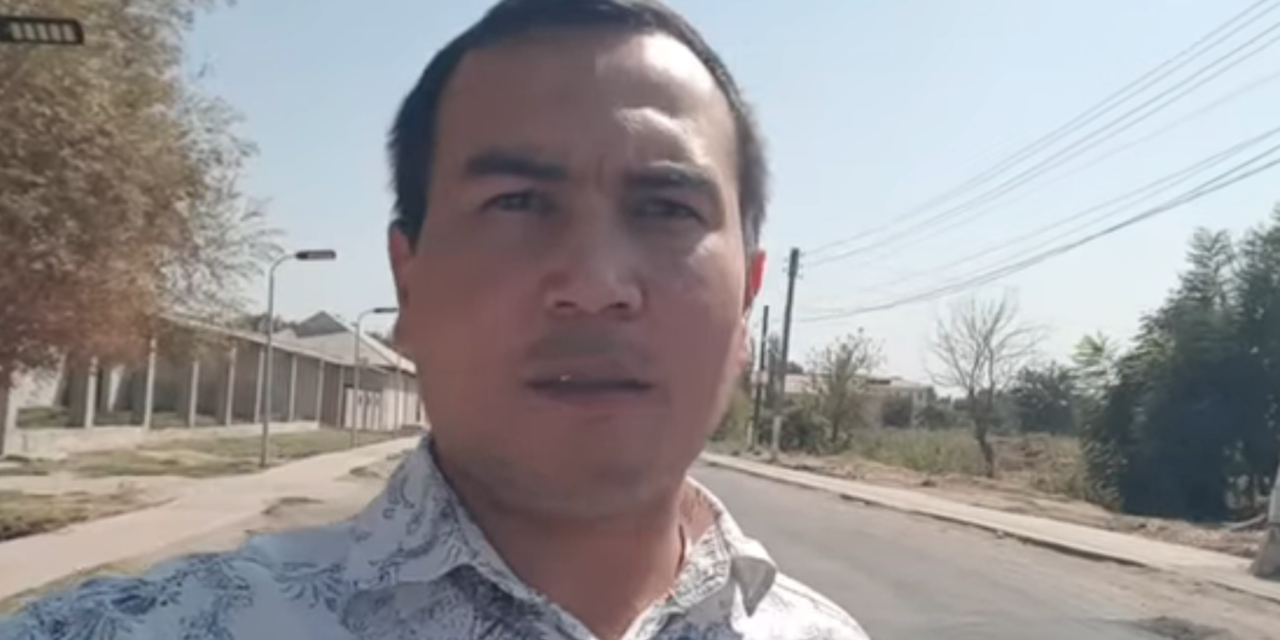
On November 20, 2025, the Kuyichirchik District Criminal Court in the Tashkent region convicted local blogger Davran Mamirjanov of the criminal offence of publicly insulting the president online. A father of four with no prior criminal record, Mamirjanov was sentenced to three and a half years in prison. His conviction stemmed from one video he posted on his YouTube channel (video no longer accessible), allegedly containing insulting remarks, as well as several audio, photo, and video files he had downloaded and privately sent to a friend, explicitly asking that they not be shared further.
34-year-old Mamirjanov was arrested on October 2, 2025, “as a result of operational measures carried out jointly by police and national security services.” Ten days later, he was charged under Article 158-3 of the Criminal Code (Public insult or defamation of the President using the internet) which carries a maximum sentence of five years’ imprisonment.
The legal provisions underpinning his conviction were introduced in Uzbekistan in 2021 and have since been actively used against social media users. In practice, the law is applied not only to publicly accessible online content but also to private communications, including files shared with a single recipient via messaging apps such as Telegram or WhatsApp.
According to the court decision obtained by Uzbek Forum for Human Rights, Mamirjanov “posted video materials on his YouTube channel ‘Xalq Gapirsin’ (‘Let the People Speak’) in April 2025, discrediting and insulting the President of Uzbekistan,” and also stored “insulting video and audio materials downloaded from the ‘Eltuz’ and ‘Ozodlik’ channels” on his phone.
The court ruling relied on forensic “political-linguistic” analysis without specifying the name of the institution or names of those responsible. This analysis concluded that a video address to the president contained “elements of discreditation and insult,” citing phrases such as: “Our President constantly speaks of ‘justice, justice’… but where is justice in Uzbekistan?” The same video, though not explicitly addressed to any individual, reportedly included the words “dishonest” and “stupid,” and was thus deemed “insulting” and “demeaning”. It is now impossible to assess the context in which these statements were made as the video and other materials referenced in the ruling are no longer accessible online.
Much of the prosecution’s case was built not on materials Mamirjanov had produced or published himself, but on files already available on the internet which he shared privately with a friend via the messaging app Telegram. These included videos produced by other users, such as the exiled Uzbek former political prisoner Safar Bekjan. Some of these videos reportedly contained phrases such as: “An Indonesian is angry with Shavkat. Are you oppressing Muslims in Uzbekistan? Shame on you…” The prosecution characterized such statements as expressions of dissatisfaction with the head of state and as inherently insulting.
Additional material cited in the case included file titles and captions interpreted as insulting—such as “May you sink into the ground” (written in a comment under a photograph of the president), as well as video titles such as “Shavkat the Charlatan,” “Mirziyoyev Is About to Flee,” and “Is Rustam Inoyatov Dead?”. [Rustam Inoyatov, a powerful and controversial figure, headed Uzbekistan’s National Security Service until 2018, and rumors about his death have circulated in recent years – Ed.]
A friend who received Mamirjanov’s messages testified in court that he had been summoned by police on April 18, 2025, during which officers confiscated his phone and discovered the files. He further confirmed that Mamirjanov had explicitly asked him not to share the materials.
Mamirjanov testified that he launched his YouTube channel, Xalq Gapirsin, on May 1, 2024, publishing 52 videos before his arrest. With around 93,000 subscribers, the channel focused on everyday social and economic issues, featuring interviews and video appeals from citizens raising personal concerns or proposing improvements to their local communities.
The court ruling alleges that some of the shared materials, particularly from independent outlets such as Eltuz and Ozodlik, were insulting and “discrediting” to the president, but fails to identify the specific statements it deemed offensive.
Mamirjanov maintained that he had no malicious intent in sharing the files and that he had only wanted to discuss them with his friend. “I realized too late that my actions could be seen as insulting to the president,” he told the court, asking for leniency. Despite his admission and appeal, the judge handed down a harsh sentence.
Social media remains one of the last avenues for civil society voices in Uzbekistan, but the continued prosecution of citizen journalists and other internet users sends a chilling message: “Exercise your right to freedom of expression at your own risk.