

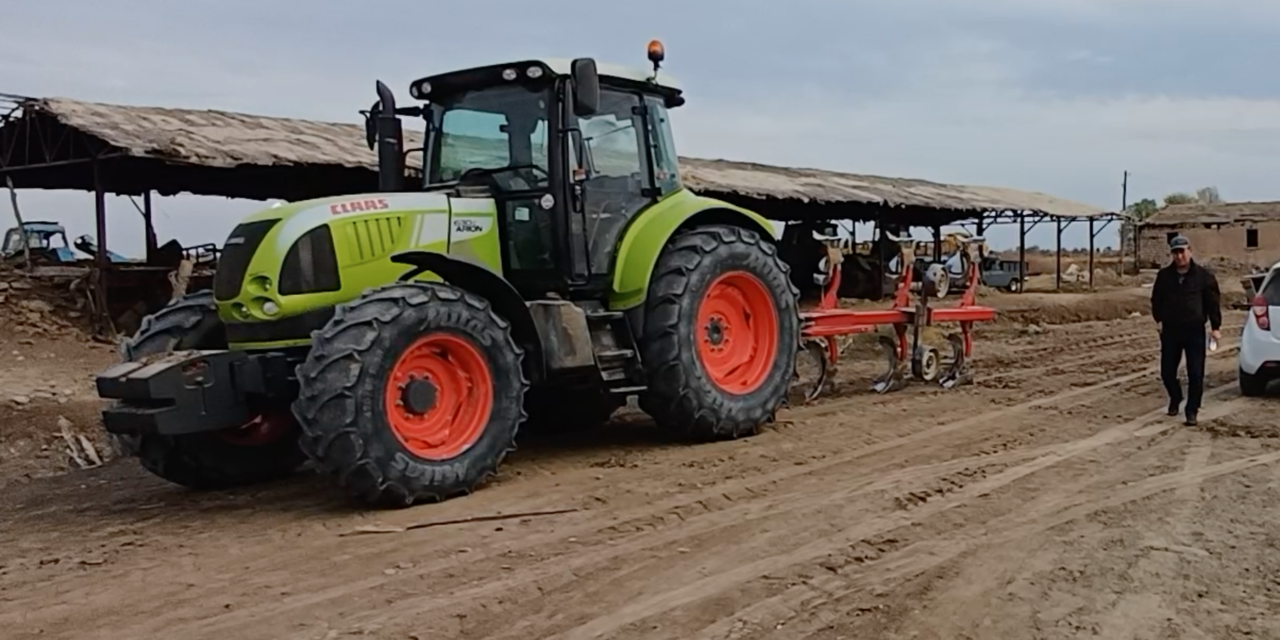
A farmer from the Khatyrchi district of the Navoi region took his own life in a sobering-up facility, where a crime prevention officer had taken him after the farmer refused to move his farm equipment before the arrival of officials from Tashkent. As reported by the independent Uzbek media outlet “Daryo” on November 16, 2026, a crime prevention officer was found guilty of abuse of power or official authority and sentenced to one and a half years of restricted freedom.
Administrative pressure, threats, and humiliating treatment of farmers remain a serious problem in one of Uzbekistan’s key sectors where agriculture accounts for about 17% of the country’s GDP and 21% of employment.
The Detention and Death of a Farmer
According to a court document reviewed by Daryo, on August 2, 2025, the deputy chief of the district internal affairs department instructed crime prevention officer A. I. to ensure that agricultural machinery was operating along the route that officials from Tashkent were scheduled to travel. The crime prevention officer demanded that the head of the “B. B.” farm move the machinery, but the farmer refused.
The officer subsequently arrived at the farm. In an adjacent orchard, he saw the farmer and a machine operator consuming alcohol and began filming them on his phone. The machine operator explained that he had already finished working and had returned the tractor from the field. The officer called in another officer and, under the pretext of the offence of drinking alcohol in a public place, took the farmer to the interdistrict medical facility for intoxicated individuals.
The farmer was left at the sobering-up facility in violation of established rules which requires a medical examination by a doctor prior to any confinement. As there was no doctor on duty a paramedic who examined the farmer did not have the authority to conduct the examination or decide whether the farmer should be kept at the facility. The farmer’s clothing and belongings were searched without witnesses present, and his phone was confiscated. His relatives were not informed of his whereabouts, and the farmer himself was not given the opportunity to contact them. According to his wife, surveillance camera footage shows her husband repeatedly asking the inspector for forgiveness which is ignored.
According to the forensic report, the farmer’s condition was affected by the fact that he was taken away from his farm and deprived of the opportunity to contact his family. Feeling humiliated and isolated, and, in a state of severe emotional distress, he took his own life. The farmer died at the sobering-up facility the same day. One of his relatives said he had come to pick him up, but police officers told him that no such person was at the facility and asked him to leave. The relative was informed of what had happened after an ambulance arrived.
A lenient sentence
The officer did not admit any guilt. He stated that he had brought the farmer in for a sobriety test, and that the decision to keep him at the facility had been made by a paramedic. The court acquitted the police officer of the charge of driving someone to suicide under subparagraph “c” of Part 2 of Article 103 of the Criminal Code due to the absence of the elements of a crime. Under Part 1 of Article 206, the court found the crime prevention officer guilty of abuse of power or official authority, sentenced him to one and a half years of restricted freedom, and barred him for the same period from working in the Ministry of Internal Affairs and holding certain positions in government agencies.
On October 23, 2026, the Navoi Regional Court reviewed the case on appeal and upheld the verdict.
Routine Pressure on Farmers
Uzbek Forum has reported extensively on the use of police force and threats against farmers. In July 2025, in the Rishan district of Fergana region, police officers arrived at the home of farmer Gairatjon Khairullaev and demanded that he immediately report to a meeting with the head of the district police department. According to the farmer, the police officers did not present a summons, and one of them pointed a gun at him and threatened to kill him. Khairullaev filed a complaint, but the prosecutor’s office refused to open a criminal case.
In August of that same year, in the same district, police officers handcuffed farmer Azizjon Tozhiboev and took him to the police station. According to Tozhiboev, the officers claimed that he had failed to present his cotton defoliation equipment for inspection.
In October 2026, Uzbek Forum reported on an audio recording of a meeting with farmers in the Pskent District of the Tashkent Region. In the recording, District Governor Muzaffar Aripov berated the farmers in a humiliating tone and threatened to confiscate their land because they had not planted potatoes.
That same month, in the Shurchin District of the Surkhandarya Region, another leaked recording featured District Governor Akbarali Ishmurzoev insulting a farmer and demanding an explanation for the delay in cotton delivery.
These cases corroborate the findings of a joint report by Uzbek Forum and Human Rights Watch, published in February 2026. The report showed that state quotas for cotton and wheat production restrict farmers’ autonomy and that farmers risk losing the land on which their livelihoods depend for failing to meet these quotas.
Record Harvest and Reports of Inflated Yields
News of the farmer’s death emerged amid government announcements of a record cotton harvest in 2026. President Shavkat Mirziyoyev congratulated farmers on harvesting more than five million tons of cotton. Meanwhile, farmers from several regions, a local official, and the head of a cotton cluster told Ozodlik (Uzbek version of Radio Free Europe/Radio Liberty) about alleged falsification of records. According to witnesses, the same deliveries of cotton were weighed multiple times by changing the license plate numbers on the trailer at collection points, and cotton that farms had not yet delivered was recorded as having been received.
In a public appeal to the president, a farmer from Nishan district in Kashkadarya region said the district prosecutor is threatening to have farmers arrested unless they inflated their cotton harvest figures. She said the order to falsify the figures had reportedly come from “higher up”.