

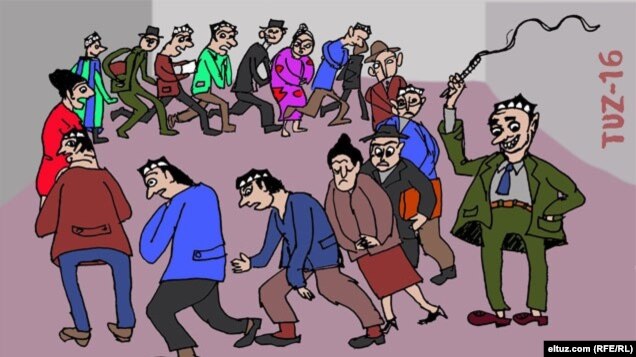
On October 25, 2026, the Uzbek news outlet Effect.uz published an audio recording allegedly made at a meeting with farmers in Shurchi district, Surkhandarya region. The voice on the recording reportedly belongs to Akbarali Ishmurzoev, the district hokim (head of administration), containing offensive and humiliating remarks directed at a farmers.
The incidents reportedly took place in October 2026 during meetings held on the premises of a fertilizer-producing company company in Shurchi District and at the district administration.
In the first recording, the man identified as the hokim asks, “Where’s the cotton?” The farmer replies: “I’ll deliver it tomorrow. There were no people today, I arranged (pickers) to come tomorrow.” The hokim then shouts: “Have you read your land lease agreement with the state? Do you know the Land Code? Which articles apply to you, farmer?”
The hokim can be heard screaming, “You fraudster, you know how to embezzle loan funds, how to grow other crops on state land, how to sell barley by the sack… But you don’t know the Land Code. Now I’ll make sure you know it, you fraudster!”
In the second recording Ishmurzoev is heard shouting and apparently banging on a table, and repeatedly directing profanities at the farmers. He demands they prepare agrotechnical equipment, start concreting canals, and clean irrigation ditches. He also berates the farmers for failing to plant mulberry trees along the edges of their fields. Addressing someone at the meeting, he then demands that the farmers concerned be denied access to their fields.
Following publication of the recordings, the Surkhandarya regional hokimiyat (administration) made an official statement:
A working group comprising representatives of the relevant authorized agencies has been established to conduct a comprehensive, objective, and thorough examination of the circumstances and provide a legal assessment. Based on the findings, a decision will be made in accordance with the procedure established by law.
Ulugbek Kosimov, the hokim of Surkhandarya region, emphasized that public officials must strictly uphold the rule of law, respect human dignity, treat others with respect, and comply with professional ethics.
The Farmers’ Council also issued a statement announcing that it had asked the prosecutor’s office to provide a legal assessment of the Shurchi hokim’s actions. The Council emphasized that human honor and dignity are inviolable, citing Article 26 of the Constitution, which states that nothing may justify their humiliation. It also referred to Article 41 of the Code of Administrative Responsibility, which provides for administrative liability for insults. The Council stated that such actions could constitute unlawful interference in business activities and damage the country’s international image.
Repentance Without Punishment
Cases of officials of various ranks insulting and humiliating workers and farmers in Uzbekistan regularly come to public attention through recordings posted online. These recordings likely reveal only a small fraction of such incidents. According to farmers who have attended these meetings, participants are often required to surrender their mobile phones before entering, and police officers check that no one retains a device capable of recording the proceedings. When such incidents come to light, they usually result in no more than disciplinary action against the officials. Uzbek Forum is unaware of a single case in which a hokim has been dismissed or even fined for such conduct.
An Attack Following a Property Dispute
The latest incident in Surkhandarya comes amid reports of an attack on Khurram Jurayev, the hokim of Kukdala district in Kashkadarya region, allegedly in retaliation for the hokim’s unlawful demolition of his business premises. According to Radio Ozodlik’s sources, law enforcement officials instructed local journalists and bloggers not to cover the incident. Ozodlik also reported that its numerous requests for comment from government officials went unanswered. Nevertheless, news of the attack spread widely on social media.
According to Ozodlik, on October 14, 2026, Jurayev sustained serious injuries to his head, face, shoulder, and arm after a local businessman attacked him with a sharp instrument. Following surgery at the district hospital, he was transported by helicopter to the Republican Scientific Center for Emergency Medical Care in Tashkent and on October 18, he was reportedly taken to Germany for treatment.
According to a lawyer familiar with the case, the suspect is a 62-year-old businessman identified as B. Y. Criminal proceedings were initiated against him under Articles 25 and 104 of Uzbekistan’s Criminal Code, concerning preparation for and attempted commission of a crime, and the intentional infliction of grievous bodily harm. Ozodlik was unable to obtain official confirmation of this information from law enforcement agencies.
Sources interviewed by Ozodlik linked the conflict to a demand to demolish the businessman’s grocery store. They said the store had been built legally and recently renovated but was slated for demolition under the “Face of New Uzbekistan” program. One source reported that the hokim had offered the businessman an alternative site for the store, but he refused to relocate. According to the sources, the dispute went to court and, although the initial verdict ruled in the businessman’s favor, a subsequent ruling overturned the verdict following an appeal by the district hokimiyat.
At the time of Ozodlik’s publication, district, regional, and national authorities had provided no public explanation of the circumstances surrounding the attack. Journalists’ repeated inquiries also remained unanswered.
Repeat offender
Ozodlik reported that farmers had previously complained about Jurayev’s actions. In appeals, farmers alleged that he had seized their land without legal grounds while serving as hokim of Chiroqchi district in Kashkadarya district. They said the land had not been returned even after the Supreme Court declared the hokim’s decision invalid.
Recurring incidents of insults, humiliation, and sometimes physical abuse by officials against farmers raise questions about the state’s response, the selective application of the law, and citizens’ ability to defend their rights. The conduct of government officials highlights the need for the state to impose stricter, proportionate penalties for using profanity and insults against subordinates and to ensure that investigations result in accountability rather than mere formal statements. The recent attack on a hokim in Kashkadarya underscores the importance of protecting the rights of farmers and entrepreneurs and ensuring that disputes are resolved lawfully before they escalate into violence.