
The limited opening of space for freedom of expression that followed President Shavkat Mirziyoyev’s rise to power has gradually given way in recent years to tighter control over public discourse. Certain subjects, such as corruption and criticizing the president online, have effectively become off-limits. Above all, journalists and commentators are expected not to contradict the official narrative of a “New Uzbekistan,” a national “Renaissance,” or the government’s claims of historic achievements under President Mirziyoyev.
Journalists and commentators inside the country have largely learned these unwritten rules. Those who cross the increasingly narrow boundaries of permissible criticism risk pressure, interrogation, the removal of their content, prosecution, or imprisonment.
Worse, the government’s efforts to suppress critical voices do not stop at Uzbekistan’s borders.
Uzbek critics of the Mirziyoyev government who live abroad are more difficult for the authorities to control directly. Many are no longer Uzbek citizens, but they still have close relatives in the country, strong personal ties, and a natural desire to visit elderly family members.
A number of cases indicate that permission to enter Uzbekistan is being used as leverage to force activists living abroad into silence and that praising the current goverment may help secure removal from the “blacklist” of people barred from entering the country.
Visits in Exchange for Silence
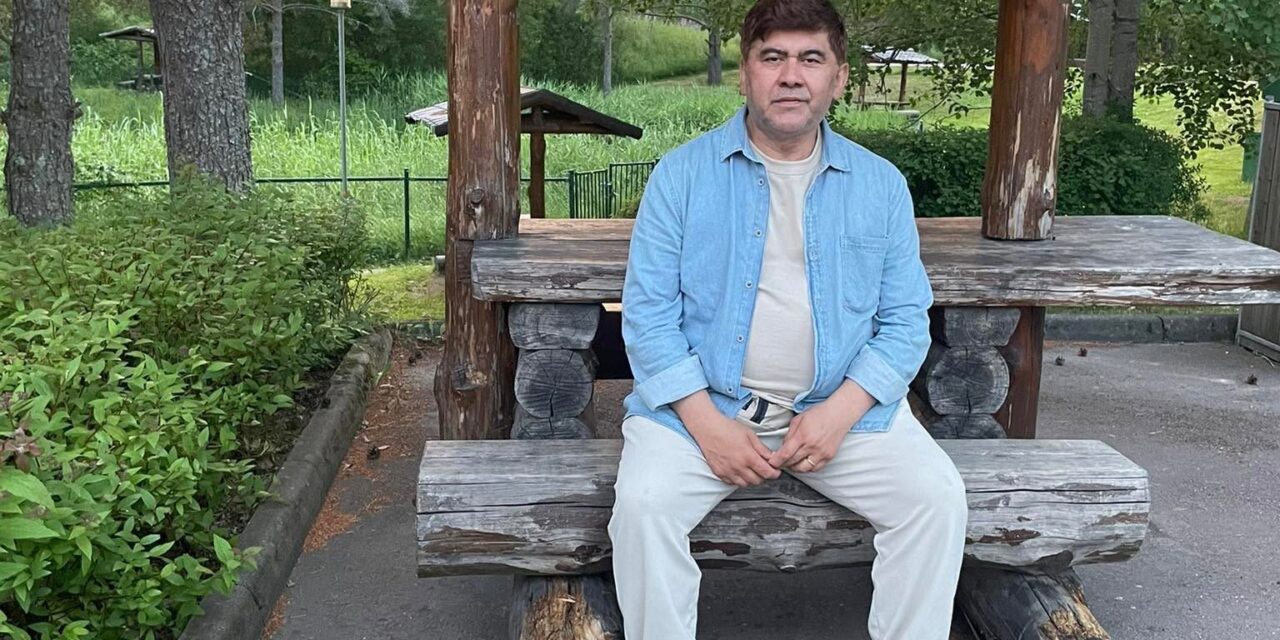
In May this year, Yusuf Rasul, a former Uzbek journalist and now a resident of Sweden, published an open letter to Uzbekistan‘s foreign minister, Bakhtiyor Saidov, in which he alleged that Uzbekistan’s security services had imposed certain conditions on his entry to the country.
Rasul previously worked as a correspondent for the BBC and Voice of America, and was a translator at the Tashkent office of the Institute for War and Peace Reporting. Following the 2005 Andijan massacre and the subsequent pressure on foreign and independent journalists, he left Uzbekistan with his wife, the poet Saodat Pulkanova, and their children.
Rasul wrote that he and his family had been permitted to visit Uzbekistan on three occasions only after receiving one-time authorization from the State Security Service (SSS) and agreeing not to publish critical posts.
Rasul wrote that a man who contacted him in 2022 and introduced himself as “Otabek” initially claimed to work for the Ministry of Foreign Affairs, but was later revealed to be an SSS officer. According to Rasul, Otabek asked him and his wife to help improve Uzbekistan’s international image by publishing positive articles about developments in the country and reporting on news and discussions abroad.
Rasul and his wife, Pulkanova, keen to be able to visit relatives in Uzbekistan, decided to comply. They published positive assessments of changes in Uzbekistan, translated articles by Swedish journalists, and cooperated with the Uzbek Embassy in Stockholm. They also helped establish an Uzbek cultural center at the embassy.
According to Rasul, the relationship changed in 2024, when another SSS officer demanded information about opposition figures and journalists living in Sweden. Rasul said that he was instructed to visit the home of Kudrat Babajanov, the Sweden-based editor of the independent media outlet Eltuz, and to secretly film the journalist’s technical equipment. Rasul said that when he refused to participate in unlawful activity, the security services’ attitude towards the family became hostile.
When the family planned another trip to Uzbekistan in 2025, the security officer warned them not to travel, saying that they would be denied entry and sent back from Tashkent airport, as had happened to Uzbek journalist Bakhtiyor Shakhnazarov, who lives in Canada.
In response, Pulkanova made a public appeal to Saida Mirziyoyeva, the president‘s daughter and head of his administration. Uzbekistan’s ambassador to Sweden, Rakhmatilla Nurimbetov, then contacted the family and offered his assistance.
At the time, Rasul and his family were in Tajikistan. He said that he was summoned to the Uzbek Embassy in Dushanbe, where officials connected him via video call with two men who introduced themselves as representatives of the Presidential Administration and the Ministry of Foreign Affairs. They allegedly offered him permission to enter Uzbekistan on condition that he refrained from publishing anything during the visit. Rasul accepted the condition, and the family was permitted entry into Uzbekistan to visit relatives.
In 2026, however, they encountered the same obstacles when they again attempted to travel to Uzbekistan. Rasul said that the SSS had stopped communicating with them, while officials from the Ministry of Foreign Affairs claimed that they could no longer assist them in entering the country.
Bakhtiyor Shakhnazarov Denied Entry
Rasul’s account resembles the experience of another former Uzbek journalist, Bakhtiyar Shakhnazarov, a resident of Canada. Shakhnazarov worked for Uzbek television from 1997 to 2003, where he presented the legal affairs program “Huquq va burch” (Rights and Responsibilities). He left Uzbekistan in 2005 and now holds Canadian citizenship.
In a recent open letter to President Mirziyoyev, Shakhnazarov said that in 2022 he was contacted by an SSS officer who also introduced himself as “Otabek”. According to Shakhnazarov, the officer offered to facilitate his visits to Uzbekistan on the condition that he ceased his public criticism of the country and President Mirziyoyev.
After Shakhnazarov agreed, the officer allegedly went further and asked him to publish material praising the president’s policies. Shakhnazarov said that he complied by preparing a report on positive changes introduced under Mirziyoyev. In September 2022, he then travelled to Uzbekistan.
Shakhnazarov later said that the security officer contacted him to express displeasure over his friendship with another Uzbek journalist and popular YouTube blogger living in Canada, Ulugbek Ashur. The officer demanded an explanation as to why Shakhnazarov had allowed Ashur to stay at his home. Shakhnazarov advised the officer “not to exceed his authority”, and ended the contact.
In October 2024, after travelling for approximately 18 hours, Shakhnazarov arrived at Tashkent airport but was denied entry. He was given no clear explanation at the airport for the decision.
State-Aligned Attacks on Activists’ Digital Platforms
Pressure on critical voices, both inside and outside Uzbekistan, has also extended into the digital sphere. Since the beginning of 2026, more than two dozen YouTube, Facebook, and Instagram accounts belonging to Uzbek journalists, independent media outlets, and human rights activists have been removed over alleged copyright violations, often following apparently coordinated complaints submitted from fake email addresses. The targets have included AsiaTerra, human rights defender Abdurakhmon Tashanov, journalist Ulugbek Ashur, and Eltuz, whose social media channels had a combined audience of millions. By failing to scrutinize potentially abusive complaints and providing no effective appeals process, platforms such as Meta and YouTube have allowed their systems to be exploited by state-aligned actors to silence critics and erase years of independent reporting.
The Long Arm of Uzbekistan’s Security Services
The Uzbek authorities have not publicly responded to the allegations made by Rasul and Shakhnazarov. The activists’ accounts, however, reflect a similar pattern: alleged SSS officers contact journalists living abroad, offer to facilitate their visits to Uzbekistan, demand that they refrain from criticism and promote the country’s “image,” and then threaten them with entry bans or impose such bans when they refuse further cooperation.
Their testimonies also suggest that the “blacklists” created under Islam Karimov remain in use almost a decade after Mirziyoyev came to power. Rasul said that a border official told him that information about journalists and human rights defenders who had been barred from entering under the previous government remained in the border-control database and could only be removed following interventions by senior ministry officials or the Presidential Administration.
Uzbekistan has the authority to regulate the entry of foreign nationals. However, it does not have the right to use entry decisions as instruments of intimidation, retaliation, or coercion. Nor should access to one’s family and country of origin be made conditional on praising the president, abandoning legitimate criticism, or spying on other journalists.
If President Mirziyoyev’s “New Uzbekistan” is to have any credibility, its security services cannot continue using methods associated with the Karimov era. Uzbekistan’s international reputation will not improve by coercing journalists into praising the government. It will improve only when journalists, both inside and outside the country, can speak freely without fear of punishment.