
Three recent cases of allegations of torture and ill-treatment of rights activists Sunnatbek Qamchiyev, Javokhir Muminov and Murod Mahsudov while in detention, again expose the lack of accountability of law enforcement officers and the inability or unwillingness of the Uzbek authorities to conduct transparent, impartial investigations into such allegations.
Qamchiyev was allegedly beaten by police officers at the prison colony where he was being held; Muminov suffered breathing difficulties and sustained bruising when he was subjected to mistreatment by law enforcement officers during his arrest; and Murod Mahsudov was repeatedly confined to a punishment cell in the prison where he was being held and subjected to psychological pressure that led him to self-harm.
Although the cases of all three men are unrelated, they were all involved in public interest work prior to their imprisonment: Muminov as a human rights defender, and Mahsudov and Qamchiyev as bloggers reporting on social issues affecting people in their communities. The charges levelled against the men and methods used to secure their convictions have been increasingly used against rights activists in recent years to stifle dissent and critical voices. The crackdown on activists and rights defenders is reminiscent of the Karimov era but markedly out of step with President Mirziyoyev’s claim of building a “new Uzbekistan”. Alarmingly, their treatment at the hands of law enforcement officials adds to the growing number of reports of torture in detention.
Javokhir Muminov
Javokhir Muminov is a human rights activist and member of Ezgulik, the Human Rights Society of Uzbekistan, and had been assisting workers at Indorama Agro to defend their rights through the courts. He was arrested in Karshi district, Kashkadarya region on June 5, 2026 on suspicion of extortion under Article 165(3) of the Criminal Code of Uzbekistan. During his arrest, Muminov said officers kicked him while forcing him into a vehicle, struck him on the head, put a bag over his head and taped his mouth closed even though he was having difficulty breathing. After his condition deteriorated, an ambulance was called several times before he was transferred to a pre-trial detention center.
Five days later, his lawyer, Lazizjon Sharipov, requested the Karshi City Prosecutor’s Office arrange a forensic medical examination to determine the nature and timing of Muminov’s injuries. Uzbek Forum for Human Rights reviewed the medical report which confirmed bruises and abrasions on Muminov’s thighs, shoulders and injuries to the pelvic area that were caused by a hard, blunt object and were consistent with the period of Muminov’s detention.
Muminov’s arrest followed a complaint by two employees of the Karshi City Bureau of Compulsory Enforcement, who accused Muminov and two others of demanding 220 million UZS (approximately US$18,300) in exchange for withdrawing an appeal to seek accountability of officials allegedly involved in a criminal act.
One of the officials, Shukhrat Quvatov, had been convicted in May 2026 of causing bodily injuries to one of the signatories to the appeal whom Muminov had been assisting, and had been sentenced to two years’ restricted liberty.
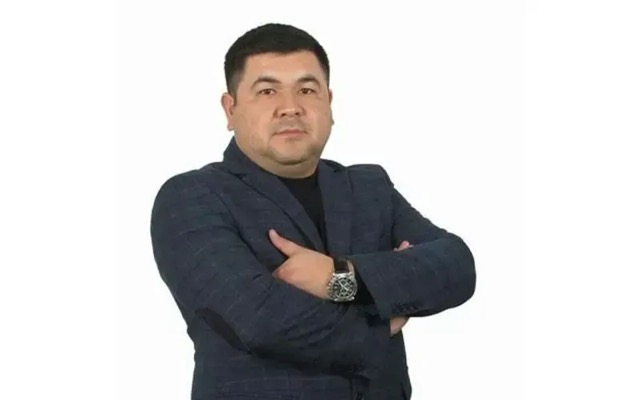
Murod Mahsudov, @Kun.uz
Murod Mahsudov
Murod Mahsudov is a Tashkent-based blogger, activist, and, like Muminov, a member of the human rights organization Ezgulik. He has been serving a seven-and-a-half-year prison sentence since his conviction by the Yashnabad District Criminal Court in 2024 for defamation (Article 139, Part 3, paragraphs “a” and “g”), extortion (Article 165, Part 2, paragraph “b”) and embezzlement (Article 167, Part 2, paragraphs “b” and “g”) following a trial which human rights defenders described as being held behind closed doors.
Prior to his imprisonment, Mahsudov used his social media presence to report on human rights violations, alleged unlawful demolitions and forced evictions.
When human rights defender Tatiana Davlatova visited him at Prison Colony No. 22 in Zangiota district on July 15, 2026, she reported that Mahsudov had been subjected to psychological pressure, insults and humiliation. According to Davlatova, responses to complaints and correspondence he had sent to state institutions had not been delivered to him.
Mahsudov was reportedly due to be transferred to a more lenient prison in May 2026, but when the transfer did not happen, he cut the veins on both his arms in protest.
Concerns had already been raised about his treatment in custody. In February 2025, Davlatova, citing Mahsudov’s father, reported that Mahsudov was repeatedly being held in a punishment cell as an alleged persistent offender and had lost around 45 kilograms, from a previous weight of more than 100 kilograms. Mahsudov had previously been placed in a punishment cell twice and, according to Davlatova, had attempted to hang himself while there.
His father, Mamirjon Mahsudov, was reportedly the only close relative able to visit him regularly. In May 2025, while travelling to Navoi to see his son, he died during the visit but the circumstances or cause of his death are unknown.
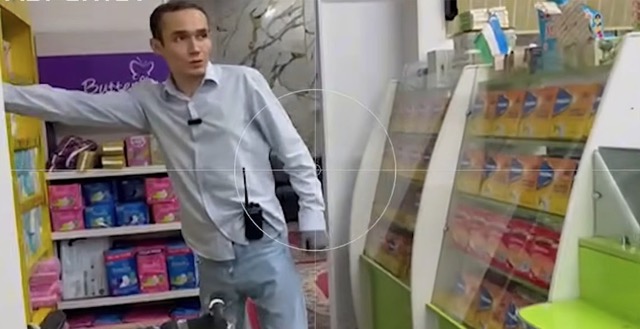
Screenshot from a video published on Sunnatbek Qamchiyev’s YouTube channel.
Sunnatbek Qamchiyev
Sunnatbek Qamchiyev is a blogger and multimedia content creator from Andijan serving a six-year prison sentence. He and an associate were found guilty of extortion committed by a group of persons on a large scale under Article 165, Part 2, paragraphs “a” and “b” of the Criminal Code. A copy of the April 10, 2026 judgment reviewed by Uzbek Forum confirms that the sentence was imposed by the Kurgontepa District Criminal Court in Andijan region, ordering that Qamchiyev serve his sentence in a strict-regime prison colony.
Before his imprisonment, Qamchiyev headed the Sensatsiya Novosti media channel, which has more than 50,000 YouTube subscribers. His reporting focused on public-interest and local issues, including alleged violations and corruption in the healthcare system and the sale of medicines at pharmacies. Qamchiyev had also publicly raised concerns about pressure by police and other law enforcement officials on bloggers and activists.
According to the court judgment, Qamchiyev and his associate, Baxtiyor Rustamov, visited several pharmacies where he had filmed alleged violations of pharmaceutical and sanitary regulations. The court found that the two subsequently demanded payments in exchange for promises not to publish the videos on social media.
The circumstances of the case have been disputed. Media online Aspekt 24 questioned whether Qamchiyev personally demanded money from pharmacy owners or knew that Rustamov had received money from them. According to the report, Rustamov told investigators and the court that Qamchiyev was unaware of the payment, but the court nevertheless found both men guilty of extortion and sentenced each to six years in prison.
In July 2026, Mukhayyo Qamchieva, Qamchiyev’s mother, filed complaints regarding ill treatment of her son at the prison colony, in which she alleged that Qamchiyev had been beaten after arriving at the colony on June 13 and was exposed to poor hygiene conditions, including a bedbug infestation and inadequate medical treatment. According to Qamchieva, her son later developed a fever of 38.6°C and complained of injuries and pain. Her complaint also included allegations of violence against other prisoners.
Uzbek Forum for Human Rights spoke with Qamchiyev’s relatives, who asked not to be identified for fear of retaliation. According to the family, representatives of the prosecutor’s office contacted them after his mother filed the complaint. The relatives said that no forensic medical examination had been conducted and that the complaint had been effectively closed on grounds of insufficient evidence.
Lack of Accountability
For years, international human rights bodies and organizations have raised concerns about torture and other ill-treatment in Uzbekistan and called for stronger safeguards and effective investigations. The UN Committee against Torture has previously raised concerns about repeated allegations of torture by law enforcement and prison officials, failures to investigate complaints effectively, and the need to ensure basic safeguards from the very beginning of detention.
Uzbekistan’s Constitution prohibits torture, violence and cruel, inhuman or degrading treatment or punishment. The country has also been a party to the UN Convention against Torture since 1995.
Uzbekistan has also committed to ratifying the Optional Protocol to the Convention against Torture (OPCAT), which would strengthen independent preventive monitoring of places of detention. As of 2026, however, Uzbekistan has still not ratified the Protocol.
The Uzbek authorities should immediately initiate prompt, impartial and transparent investigations into allegations of torture and ill treatment of prisoners and detainees, ensure that complaints can be filed safely without fear of retaliation, preserve crucial evidence such as CCTV footage and medical reports and hold those responsible to account. In addition, the authorities must ensure access to appropriate medical and psychological care, confidential communications with lawyers, and must not obstruct visits by family members.